


ebikekit
E-BikeKit Front Wheel Conversion System – No Battery
E-BikeKit Front Wheel Conversion System – No Battery
🚚
Processing & Shipping:
Small parts typically ship the same business day when ordered before noon ET.
Larger kits, wheels, and battery shipments usually ship within 1–2 business days unless otherwise noted.
Couldn't load pickup availability
Overview
- Complete SINET™ front-wheel conversion system for riders who already have a compatible 48V battery
- 500W nominal front hub motor system with smooth sine-wave motor control
- External SINET™ controller for flexible mounting and battery integration
- Standard 100 mm front dropout spacing
- Choose cadence or bottom bracket torque-sensing pedal assist
- 3.5" full-color SINET™ LCD with USB charging port, diagnostics, and programming
- USA hand-built front motor wheel with 12-gauge stainless steel spokes and double-wall aluminum rim
- Thumb throttle and locking e-brake levers included
- Battery and charger are not included
The E-BikeKit Front Wheel Conversion System – No Battery is designed for riders who already have a suitable 48V battery or need a replacement conversion system without purchasing another battery.
Built around the latest SINET™ electronics, the system combines quiet sine-wave motor control, refined throttle response, your choice of cadence or torque-sensing pedal assist, and an intuitive full-color display.
Because the motor is installed in the front wheel, your existing rear wheel and drivetrain remain unchanged.
Description
Front-Wheel Electric Bike Conversion System – No Battery
This version uses an external SINET™ sine-wave controller, giving you flexibility in battery choice, battery location, controller mounting, and wiring layout. It is well suited for new conversions, replacement systems, adult tricycles, cargo bikes, and specialty applications where a compatible battery is already available.
The motor wheel installs in a compatible front fork with standard 100 mm dropout spacing, allowing the rear wheel, gearing, and drivetrain to remain unchanged.
Ordering is simple: choose the correct front wheel size and select either cadence or bottom bracket torque-sensing pedal assist. Front dropout spacing is always 100 mm for this system.
Front wheels are USA hand-built using 12-gauge stainless steel spokes and double-wall aluminum rims.
Who is this system for? Riders who already own a compatible 48V battery and want a high-quality front-wheel conversion or replacement system without purchasing another battery and charger. Recommended total load is up to approximately 300 lb, depending on the bicycle and application.
What’s Included
- USA hand-built front hub motor wheel in the selected wheel size
- External SINET™ sine-wave controller
- SINET™ 3.5" full-color LCD with USB charging port
- SINET™ component wiring harness
- Thumb throttle
- Left and right mechanical e-brake levers with motor cutoff and parking lock
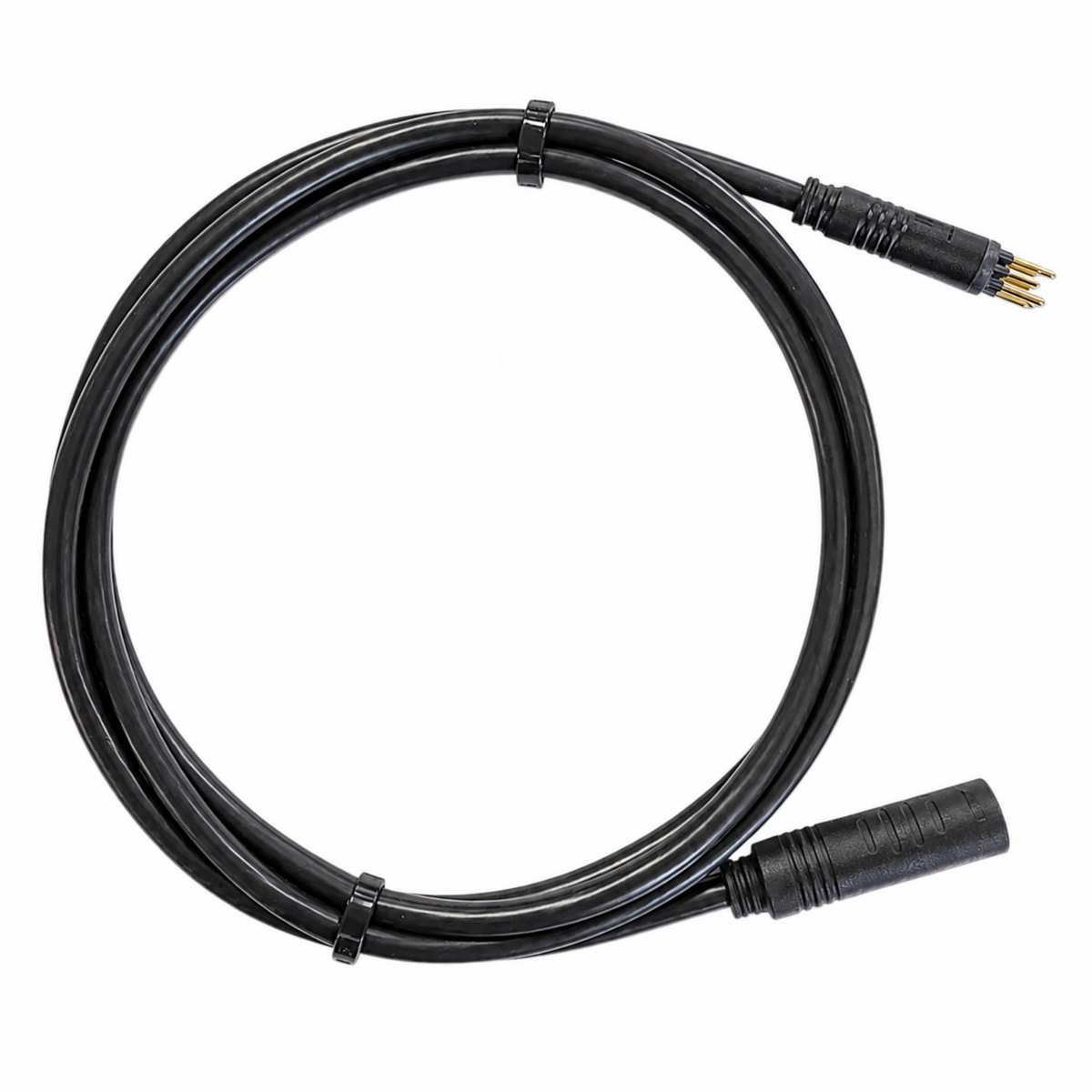
- Motor cable
- Battery wire harness / pigtail for connecting a compatible 48V battery
- Torque arm(s), washers, zip ties, and installation hardware as required
Your pedal-assist selection determines the sensor included:
- Cadence Sensor: Left-side external cadence sensor with 12-magnet split disc
- Bottom Bracket Torque Sensor: 68 mm square-taper torque-sensing bottom bracket with required SINET™ extension cable
Not Included: Battery, charger, and battery mounting system.
Display Mounting Note: A handlebar extender is not included with this universal system. Most standard bicycles can mount the LCD directly to the handlebars. Some bicycles and many adult tricycles may require a separate display mounting extension because of baskets, handlebar shape, or steering geometry.
SINET™ External Controller System
The external-controller version of SINET™ is designed for riders and builders who want flexibility in battery choice, mounting location, controller placement, wiring layout, and future service.
- Quiet, efficient SINET™ sine-wave motor control
- External controller for flexible mounting
- 3.5" full-color LCD with USB charging port
- Matched waterproof electrical connectors throughout the SINET™ system
- Cadence and torque-sensing pedal-assist compatibility
- Throttle-on-demand
- Motor cutoff through both e-brake levers
- Easy controller access for diagnostics or future replacement
Front Wheel Fitment
This system is designed around standard 100 mm front fork dropout spacing. Unlike a rear-wheel conversion, there is no freewheel, rear drivetrain, or variable dropout-spacing selection to configure.
- Front Dropout Spacing: 100 mm
- Wheel Size: Select the wheel diameter that matches your bicycle or tricycle
- Rear Drivetrain: Remains unchanged
- Fork Type: Conventional slotted front dropouts required
Check fitment before ordering. Front thru-axle forks are not compatible. If you are unsure whether your fork is suitable for a hub-motor conversion, contact E-BikeKit before ordering.
Pedal Assist Options
Cadence Sensor
The cadence sensor detects crank rotation and activates pedal assistance according to the assist level selected on the LCD. It is an external left-side sensor and is the simpler installation option for most conversions.
- Left-side external sensor
- 12-magnet split disc
- Detects crank rotation
- Simple installation on compatible bikes and trikes
- Does not measure rider force
Bottom Bracket Torque Sensor
The optional bottom bracket torque sensor measures rider effort and provides motor assistance in proportion to how hard you pedal, creating a smoother and more natural riding feel.
- 68 mm square-taper bottom bracket
- Required SINET™ extension cable included
- Measures rider pedaling force
- Provides smooth, proportional assistance
- Requires compatible 68 mm square-taper bottom bracket fitment
- Installation requires a protected cable-routing hole through the bottom bracket shell
Which should you choose? Cadence sensing is simpler to install and provides dependable traditional pedal assist. Torque sensing provides the more natural and responsive riding experience but requires compatible bottom bracket fitment and a more involved installation.
Display Features
The included SINET™ 3.5" full-color LCD provides clear ride information along with system setup, diagnostics, and programming controls.
- 3.5" full-color display
- USB charging port
- Battery voltage display
- Battery level indicator
- Current speed
- Trip meter and odometer
- Pedal-assist level selection
- Walk-assist mode
- Error diagnostics
- Advanced programming menu
LCD Programming & Setup Video
Watch the video below for an overview of the SINET™ LCD, including initial setup, programming, display operation, and commonly used system settings.
LCD Quick-Start Guide
Download the SINET™ LCD quick-start guide for display operation, setup, programming, and system settings.
Motor & System Specifications
- System Type: Front-wheel electric bike conversion system
- Nominal Motor Power: 500W
- System Voltage: 48V
- Motor Type: Brushless internally geared front hub motor
- Front Dropout Spacing: Standard 100 mm
- Controller: External SINET™ sine-wave controller
- Battery: Not included
- Charger: Not included
- Display: SINET™ 3.5" full-color LCD with USB charging port
- Throttle: Thumb throttle included
- Pedal Assist: Cadence sensor or 68 mm bottom bracket torque sensor
- Wheel Build: USA hand-built
- Spokes: 12-gauge stainless steel
- Rim: Double-wall aluminum
- Recommended Total Load: Up to approximately 300 lb depending on bicycle and application
Battery Compatibility & Connection
No battery or charger is included with this system. It is intended for use with a compatible customer-supplied 48V lithium-ion battery.
- Battery Voltage: Compatible 48V battery required
- Battery Connection: Battery wire harness / pigtail included for integration with a compatible battery connection
- Battery Mounting: You must provide a secure and structurally appropriate battery mounting solution
- Discharge Capability: The battery must safely support the current demand of the SINET™ controller
- Battery Condition: The battery must be in safe operating condition with a functioning battery management system
- Polarity: Correct polarity must be verified before connecting the battery
Important: A battery being 48V does not by itself guarantee compatibility. Connector type, polarity, discharge capability, battery condition, and mounting must all be appropriate for the system.
If you are unsure whether your existing battery is compatible, contact E-BikeKit before ordering. Photos of the battery label, battery connector, and mounting arrangement can help us evaluate compatibility.
Compatibility
The E-BikeKit Front Wheel Conversion System is designed for compatible bicycles, adult tricycles, cargo bikes, and specialty cycles with standard 100 mm conventional slotted front fork dropouts.
Before ordering, confirm:
- Correct front wheel size
- Standard 100 mm front fork dropout spacing
- Conventional slotted fork dropouts
- A secure mounting location for the external SINET™ controller
- A compatible 48V battery and secure battery mounting solution
- Bottom bracket compatibility if selecting the torque sensor
Fork & Torque Arm Notes:
- Steel forks are recommended
- Torque arms must be installed where required
- Aluminum forks require particular care and properly installed torque arms
- Confirm that the fork is suitable for a hub-motor installation before ordering
Not Compatible With:
- Front thru-axle forks
- Weak, damaged, or unsuitable fork dropouts
- Forks that do not provide standard 100 mm dropout spacing
- Suspension forks not designed or approved for hub-motor installations
- Incompatible, damaged, or under-rated batteries
- Bottom brackets incompatible with the selected pedal-assist system
If you're unsure about fitment, contact E-BikeKit before ordering. Photos of your front fork/dropouts, battery, battery connector, bottom bracket area, handlebars, and intended controller location can help us confirm compatibility.
Installation
Installing a front-wheel electric conversion system requires mechanical bicycle work as well as mounting and connecting electrical components. Professional bicycle-shop installation is recommended if you are not experienced with bicycle wheels, forks, brakes, battery wiring, and electric conversion systems.
- Install the motor wheel into standard 100 mm front fork dropouts
- Install the supplied torque arm(s) as required and properly tighten axle hardware
- Mount the external SINET™ controller securely
- Install the compatible 48V battery using an appropriate mounting system
- Verify battery voltage, polarity, connector compatibility, and discharge capability before connection
- Install the LCD, thumb throttle, locking e-brake levers, and selected pedal-assist sensor
- Route wiring away from moving parts, heat sources, steering components, tires, chains, and sharp edges
- Verify brake cutoffs, throttle operation, pedal assist, wheel clearance, battery connection, steering movement, and display settings before riding
Proper wheel fitment, axle security, torque-arm installation, brake adjustment, controller mounting, battery mounting, electrical connection, and cable routing are essential for safe and reliable operation.
FAQ & Support
Learn more: Top 25 Frequently Asked Questions
E-BikeKit technical support is available before and after your purchase to help with product selection, battery compatibility, installation, setup, and replacement parts.
Questions? Call us toll-free at 1-866-882-3245, Monday–Friday, 9am–5pm EST, or email support@ebikekit.com.
Shipping Notes
This system ships without a battery, so there is no lithium-battery Hazmat shipment associated with this product. Components ship via standard ground service unless otherwise noted. Depending on the order, components may arrive in more than one package.


I recently purchased and installed the front wheel 500W performance e-bike kit on my 26" chromoly steel mountain bike. This is the second kit I've used on this same bike, the first being an analog E-bike kit with no LCD cyclometer, installed in 2012; the 750W Nine Continent motor burning out after 45000 miles of heavy duty use. Since the first kit worked so well, I'm now trying this one.
A certain mechanical experience is required for all kits, of course. The installation of this motor and ancillary parts was much easier to install than the first kit I used, only taking three hours, and hooking up the wires was easy as well, since they were all color coded and size dependent, unlike the first kit. I did use a couple parts from the first kit which were already on the bike, including the original torque arm, but that because it was easier that way. My battery was a separate 36V 12AH Lithium iron phosphate battery I already had, which required a separate mounting on the rear rack. This process deserves the highest rating.
When it comes to programming the cyclometer, I suspect the manual is out of date, and is missing a couple key points as well
First, I wasn't planning to use peddle assist, so didn't plug in the PSA sensor. It turns out, the PSA sensor must be plugged in whether you use it or not, otherwise you get an erro code 4 on the LCD. So I plugged it in, then put it out of the way without installing the magnetic ring, avoiding the installation hassle.
Second, there are actually 6 PSA power levels in the large circle on the LCD, rather than 5, with zero being the sixth one. Turns out, when the PSA level is set at zero, the throttle won't work either, no matter which drive setting is used. So the PSA level must be set at 1 or above for the throttle to work. The level set for 1-5 does does not effect the throttle power.
Third, there is only one 36V level for the battery in the menu, rather than the two mentioned in the manual--the 36V SLA level. Turn out this actually works fairly well for the 36V 12AH LiFePo4 battery, with only a slight overestimate of range. After a couple of test runs, I've determined the top speed to be about 20mph on level terrain, and the range of this battery to be about 24mi at 50F, with about a 25% drop at around 30F. This range is for my pulse and pedal method of biking--pulsing the speed up to 20 mph, then pedaling without the motor until the speed drops to around 15mph, then using the motor to pulse back up to 20mph. Continuous use of the motor will give a lower range, but a higher average speed.
Fourth, speedometer and odometer read about 20% low when I set the wheel size in the menu to my 26" wheel size, as determined by the calibrated Velo Cateye 8 cyclometer already on the bike, as well as checking the odometer after traveling known differences to different destinations. Setting the menu selection to 27.5" gives a 10% low reading. I'll experiment with other sizes once the snow that fell last night melts.
I'd add another star after the online manual is updated to reflect the changes.
The nice thing about using a kit is that you can save money and choose your own bicycle--one that fits you own physique--resulting in an e-bike that is more lightweight and maneuverable than the heavy low-cost Chinese clunkers that fall apart in three years.
Jim